- Blog
What is AI Healthcare? Plus 5 Benefits of Using It
June 2, 2022
Artificial Intelligence (AI) is increasingly being used in healthcare for a wide range of applications.
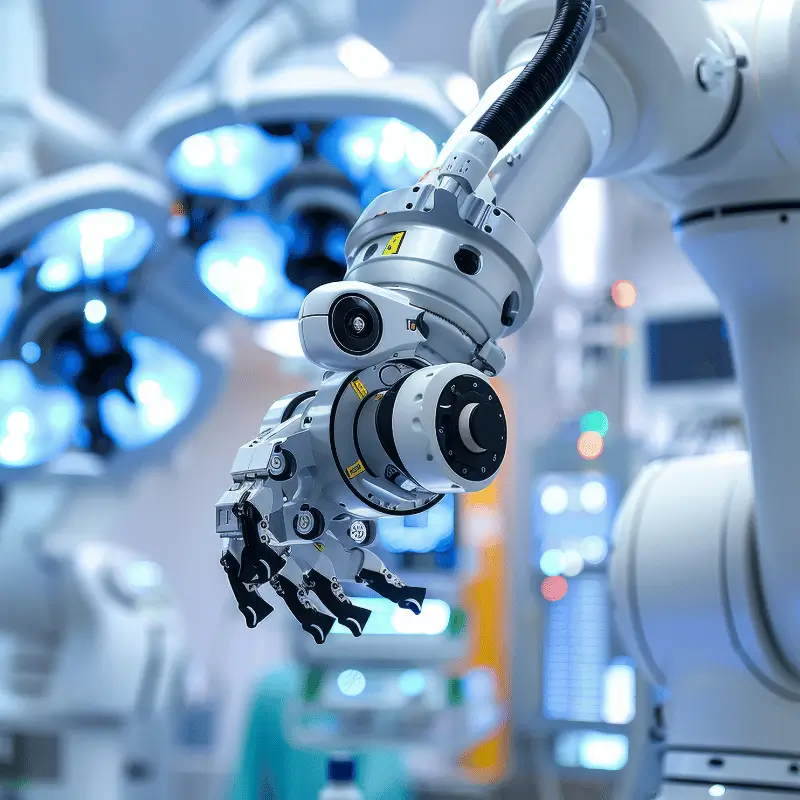
Artificial Intelligence (AI) is increasingly being used in healthcare for a wide range of applications. AI isn’t something from a faraway sci-fi future – it’s a living reality right here and now. In fact, it’s been used in healthcare for decades.
But what actually is AI in healthcare? Why does it matter? What are the applications? And what does the future hold for AI in healthcare medical settings?
In this blog post, you’ll have answers to all these questions, plus examples of how it’s being used to benefit clinicians and patients alike. We’ve read through the critical research and transformed it into a digestible, easy-to-read guide, backed by expert science.
What is Artificial Intelligence (AI) in Healthcare?
Artificial intelligence (AI) in healthcare refers to machine learning algorithms and cognitive technologies that are applied in medical settings.
Essentially, this involves computer models being fed data that they interpret and learn from, enabling them to predict future behavior. They mimic human cognition and can make decisions without human input or potential biases.
To illustrate our point, the computer models could be fed data like patient records. Then, the machine learning algorithm would learn from this data to make future decisions. As a result, it can help with diagnosis and the development of personalized treatment plans.
For example, Empa Healthcare is using AI in healthcare to determine precise dosages of painkillers for patients.
It’s worth noting that humans are still involved in this decision-making. AI just provides them with more data and insights to work with.
Why Does AI in Healthcare Matter?
AI in healthcare could have widespread implications for the medical industry. It can assist doctors, nurses, and other medical professionals in making life-saving decisions. Not only that, it can help manage people’s pain levels, so they’re more comfortable whilst receiving treatment.
AI is useful for treating disease, as well as for diagnosis and prevention. Overall, AI in healthcare leads to better patient outcomes and helps doctors make more informed, data-driven decisions.
But it isn’t just useful on a patient level. It can predict larger healthcare trends, such as the spread of diseases, which can help inform policymaking to reduce the impact of outbreaks and pandemics.
Types of AI Used in Medical Settings
Machine Learning
Machine learning is where you ‘train’ models with data, so they can predict future behavior. For example, you can give the model data on different patient attributes – age, sex, environment, past health conditions – and use it to predict which types of treatment are likely to succeed. It can see patterns where humans can’t. One application is that it’s being used to spot features in radiology scans, which helps predict whether patients could develop cancer.
Natural Language Processing
Statistical Natural Language Processing (NLP) is based on machine learning algorithms. With a large dataset, it can understand and predict language patterns. It has applications such as informing speech recognition software and analyzing patient notes to create reports. Already, some patients have conversations with bots thanks to AI in healthcare. These bots can answer simple, frequently asked questions without the need for human input.
Physical Robots
Robots have been undertaking pre-defined tasks for years. But now, they’re incorporating more AI elements. For example, they can aid with radiotherapy treatment and intelligently work out where to treat in the body, so there’s minimal damage elsewhere.
Robotic Process Automation
This refers to AI that’s improving administrative tasks, such as those in information systems. AI helps automate billing, updating patient records, and booking appointments. This has more to do with workflow and processes in healthcare, rather than providing actual treatment.
Overview of Medical Research
What Needs to Change to Scale AI in Healthcare?
The Future of AI in Healthcare
There are some skeptics of AI in healthcare, and there are inaccuracies that need to be addressed. But, generally, professionals predict that AI will only become more sophisticated and accurate in the future. Where AI in healthcare already exists, such as administration, this will likely increase and become more widespread.
Progress will be slow at first. The healthcare system needs to get up to speed with digitization and educating their workforce in data literacy. But in the next 10-20 years, AI will become a normal part of everyday life in healthcare settings. Having said that, AI won’t replace clinicians. It will only enhance their decision-making and reduce their workload.
Doctors won’t disappear. They’ll just have more time to focus on their critical thinking, creative, and communication skills – which, after all, is what makes us different from any kind of AI technology.
TecEx Medical Import Solutions
Moving AI in healthcare and other high-value medical technology across borders involves layered regulatory requirements that go well beyond standard customs clearance. Specialized knowledge in registrations, certifications, and jurisdiction-specific compliance is essential for successful shipments. Licensed AI hardware deployments now sit under a compliance layer above ordinary customs clearance. Acting as the IOR, TecEx Medical takes legal responsibility for accurate classification, valuation, licensing, and documentation on every shipment.
Need an importer of record to get your medical goods through customs? TecEx Medical can take on all the responsibility for you, and ensure your items reach your destination on time without any hiccups.
Want to learn more? Explore our Medical IOR services.